Mold Remediation vs Mold Removal in Fort Myers
Understanding Mold Removal and Mold Remediation
Mold removal and mold remediation are often discussed as separate options, but both relate to the broader problem of indoor mold and the moisture conditions that allow it to develop. Removing visible growth or contaminated materials may be one part of a remediation project, while broader remediation can also involve containment, cleaning, drying, and moisture correction.
For Fort Myers properties, the appropriate approach depends on where the mold is located, which materials are affected, how far moisture has traveled, and whether leaks, flooding, storm damage, condensation, or persistent humidity are continuing to support the problem.
Understanding the scope of the moisture issue is therefore more useful than choosing between the terms “removal” and “remediation” based on visible growth alone.
What Is Mold Removal?
“Mold removal” is commonly used to describe physically cleaning mold from suitable surfaces or removing materials that have become contaminated. Depending on the situation, this may involve cleaning a limited affected area or removing drywall, insulation, flooring, trim, or other materials that cannot be adequately cleaned.
Limited removal may be part of the response when:
- The affected area is clearly identified and accessible
- The moisture source is known and has been corrected
- Contamination is limited to specific materials or surfaces
- Hidden moisture or broader affected areas are not suspected
Mold removal should not automatically be viewed as a separate alternative to remediation. Removal of contaminated materials can also be one step within a broader mold remediation project, particularly when containment, drying, cleaning, or moisture correction is also required.
What Is Mold Remediation?
Mold remediation is a broader process for addressing mold-contaminated materials and the conditions associated with the problem. Depending on the project, remediation may include containment, cleaning, removal of affected materials, air filtration, structural drying, moisture correction, and measures intended to reduce recurring dampness.
A broader remediation scope may be appropriate when:
- Mold affects multiple materials or extends beyond a clearly defined surface area
- Water intrusion or hidden moisture may have spread into walls, flooring, insulation, attics, or other enclosed spaces
- Mold returns after previous cleaning or limited removal
- Flooding, roof leaks, plumbing failures, or storm damage have affected the property
- Containment, drying, or removal of contaminated porous materials is needed
The objective is not simply to make visible mold disappear. The scope should reflect both the affected materials and the moisture conditions that allowed the problem to develop.
Key Differences Between Mold Remediation and Mold Removal
| Factor | Limited Mold Removal | Broader Mold Remediation |
|---|---|---|
| Primary focus | Cleaning or physically removing identified mold-affected materials | Addressing affected materials as part of a broader contamination and moisture-control scope |
| Moisture source | Should still be identified and corrected | Usually forms an important part of determining the remediation scope |
| Containment | May be needed depending on materials and extent | Often considered when affected materials or work areas require isolation |
| Drying and moisture control | May be limited if materials are already dry and the source has been corrected | May involve structural drying, dehumidification, leak correction, or other moisture-control measures |
| Affected materials | Often focused on clearly identified surfaces or materials | May involve walls, flooring, insulation, framing, attics, crawlspaces, or concealed areas |
| Relationship between the two | Removal can sometimes address a limited concern | Removal may also be one step within the remediation process |
When Limited Mold Removal May Be Enough — and When Broader Remediation May Be Needed
The appropriate scope depends less on the terminology and more on the affected materials, moisture source, accessibility, and whether the problem extends beyond the visible area.
When Limited Removal May Be Part of the Solution
A limited removal or cleaning approach may be appropriate when the affected area is accessible, the moisture source has been corrected, and there is no indication that water or contamination has spread into surrounding materials.
Examples may include:
- Clearly defined affected materials
- Localized surface contamination
- Materials that can be removed without opening a larger concealed area
- Moisture conditions that have already been corrected and dried
Limitations of Surface Cleaning or Removal Alone
Removing what is visible does not necessarily address moisture behind the surface. Mold or damp materials may remain inside walls, beneath flooring, within insulation, or in other enclosed spaces when water has traveled beyond the apparent problem area.
Additional evaluation may be useful when:
- Growth returns after cleaning
- Musty odors remain
- Water damage extends beyond the visible surface
- Materials remain damp
- The source of moisture is unclear
When a Broader Remediation Scope May Be Needed
Remediation may be more appropriate when the affected area requires containment, multiple contaminated materials are involved, moisture remains concealed, or water damage has spread into structural or enclosed areas.
This can occur after:
- Flooding or significant water intrusion
- Roof or plumbing failures
- Storm-related moisture
- Persistent indoor humidity
- Mold affecting drywall, insulation, flooring, framing, or multiple areas
What Broader Remediation May Add to the Project
Depending on the property conditions, a remediation project may add containment, filtration, controlled material removal, structural drying, cleaning of suitable materials, moisture monitoring, or recommendations for correcting the water source.
The exact scope should follow the property conditions rather than assuming every mold problem requires the same response.
How Fort Myers Moisture Conditions Affect the Choice Between Removal and Remediation
Fort Myers humidity, leaks, flooding, storms, and recurring water intrusion can influence whether an indoor mold problem remains limited to visible materials or extends into walls, flooring, insulation, attics, or other concealed areas. When active water damage is part of the problem, water damage restoration may also be needed before or alongside remediation.
High Humidity and Recurring Indoor Moisture
High indoor humidity can make materials slower to dry and may contribute to recurring dampness in rooms or enclosed spaces with limited airflow. If mold repeatedly returns after surface cleaning, the moisture conditions may need to be investigated before deciding whether limited removal is sufficient.
This can affect:
- Walls and ceiling surfaces
- Closets and other enclosed areas
- HVAC-adjacent spaces
- Bathrooms and other high-humidity rooms
- Materials exposed to recurring condensation
Storms, Heavy Rainfall, and Water Intrusion
Tropical storms, heavy rainfall, wind-driven rain, roof damage, and flooding can introduce water beyond the immediately visible area. When water moves into wall cavities, flooring systems, insulation, or other porous materials, a broader drying or remediation scope may be needed.
Areas that may require closer review include:
- Roof and ceiling assemblies
- Exterior walls
- Flooring and subflooring
- Insulation
- Cabinets and built-in materials
- Lower areas affected by flooding
Hidden Moisture Behind Walls and Beneath Flooring
Water can remain concealed after visible surfaces appear dry. Musty odors, recurring staining, soft materials, or mold returning in the same area may indicate that moisture has reached materials behind the surface.
In these situations, simply cleaning or removing visible growth may not reveal the full scope of the problem.
Attics, Crawlspaces, and Other Enclosed Areas
Attics, crawlspaces, wall cavities, and other low-airflow areas can hold moisture longer than open interior spaces. Roof leaks, ground moisture, condensation, drainage problems, or limited ventilation may influence whether treatment should focus on a specific material or a broader remediation and moisture-control plan.
For Fort Myers properties, the key question is not simply whether mold should be “removed” or “remediated.” The more useful question is how far the moisture and affected materials extend and what must be addressed to correct the property condition.
How Project Scope Affects Mold Removal and Remediation Costs
Cost is determined primarily by the work required rather than whether the project is labeled “removal” or “remediation.” A limited project involving accessible materials may cost less than work requiring containment, structural drying, demolition, or treatment of multiple concealed areas.
Limited Removal or Cleaning Costs May Be Influenced By
Size and accessibility of the affected area
Type of material being cleaned or removed
Disposal and replacement requirements
Disposal and replacement requirements
Whether containment is needed
Whether the moisture source has already been corrected
Whether the moisture source has already been corrected
Broader Remediation Costs May Also Reflect
Containment and air-filtration requirements
Multiple affected rooms or materials
Removal of drywall, flooring, insulation, or other porous materials
Structural drying and dehumidification
Hidden moisture investigation
Water damage restoration needs
Accessibility of attics, crawlspaces, or enclosed areas
The most useful estimate is based on the actual affected area, moisture source, materials, and scope of work rather than assuming remediation will always cost more simply because it uses a broader term.
For detailed local pricing, see the cost guide below.
Understanding the risks can help you decide when to act.
When an Evaluation Can Help Clarify the Right Approach
An evaluation can be useful when it is not clear whether the visible area represents the full problem or whether moisture has spread into surrounding materials.
Consider requesting an evaluation when:
- Mold returns after previous cleaning or removal
- Musty odors continue after visible growth has been addressed
- Water damage has affected walls, flooring, ceilings, insulation, or other porous materials
- The moisture source is unknown
- Flooding, roof leaks, or storm-related water intrusion have occurred
- Mold appears in more than one area
- You are unsure whether inspection, testing, drying, removal, or remediation should come first
If it is unclear whether the concern is limited to visible materials or connected to hidden moisture or water damage, an evaluation can help determine whether inspection, drying, water damage restoration, limited material removal, or broader mold remediation is appropriate.
Mold Services to Consider Before Requesting an Evaluation
The appropriate next step depends on whether the main concern involves visible affected materials, hidden moisture, uncertainty about the extent of growth, or active water damage. These services can help clarify the property conditions before a removal or remediation scope is determined.
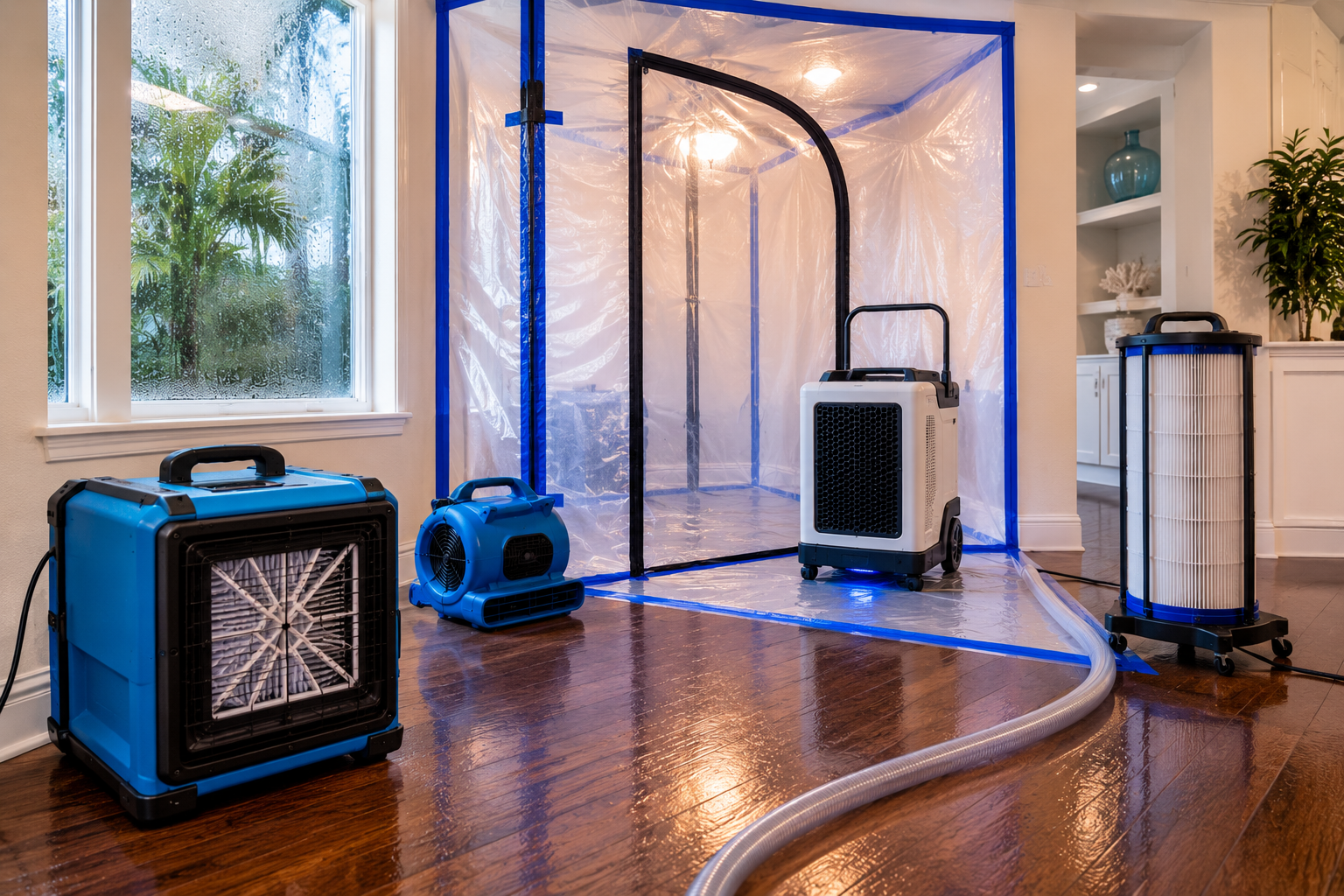
Mold remediation addresses affected materials while also considering the leaks, humidity, flooding, or hidden moisture contributing to the problem. Review the remediation process to understand when a comprehensive approach may be more appropriate than limited surface removal.
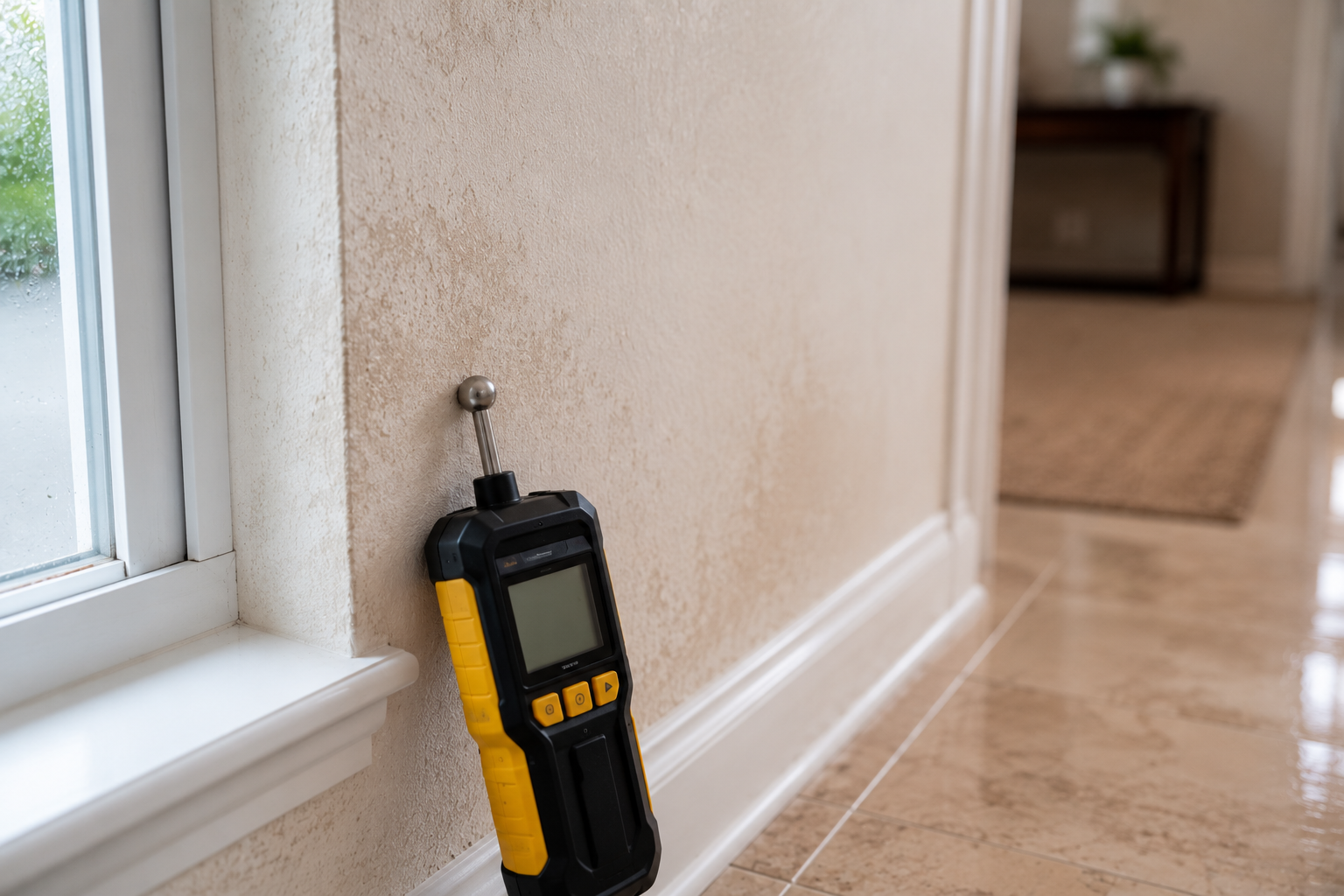
A mold inspection can help identify visible and hidden areas of concern, moisture conditions, and factors influencing the recommended response. This may be an appropriate first step when the extent or source of the problem is unclear.
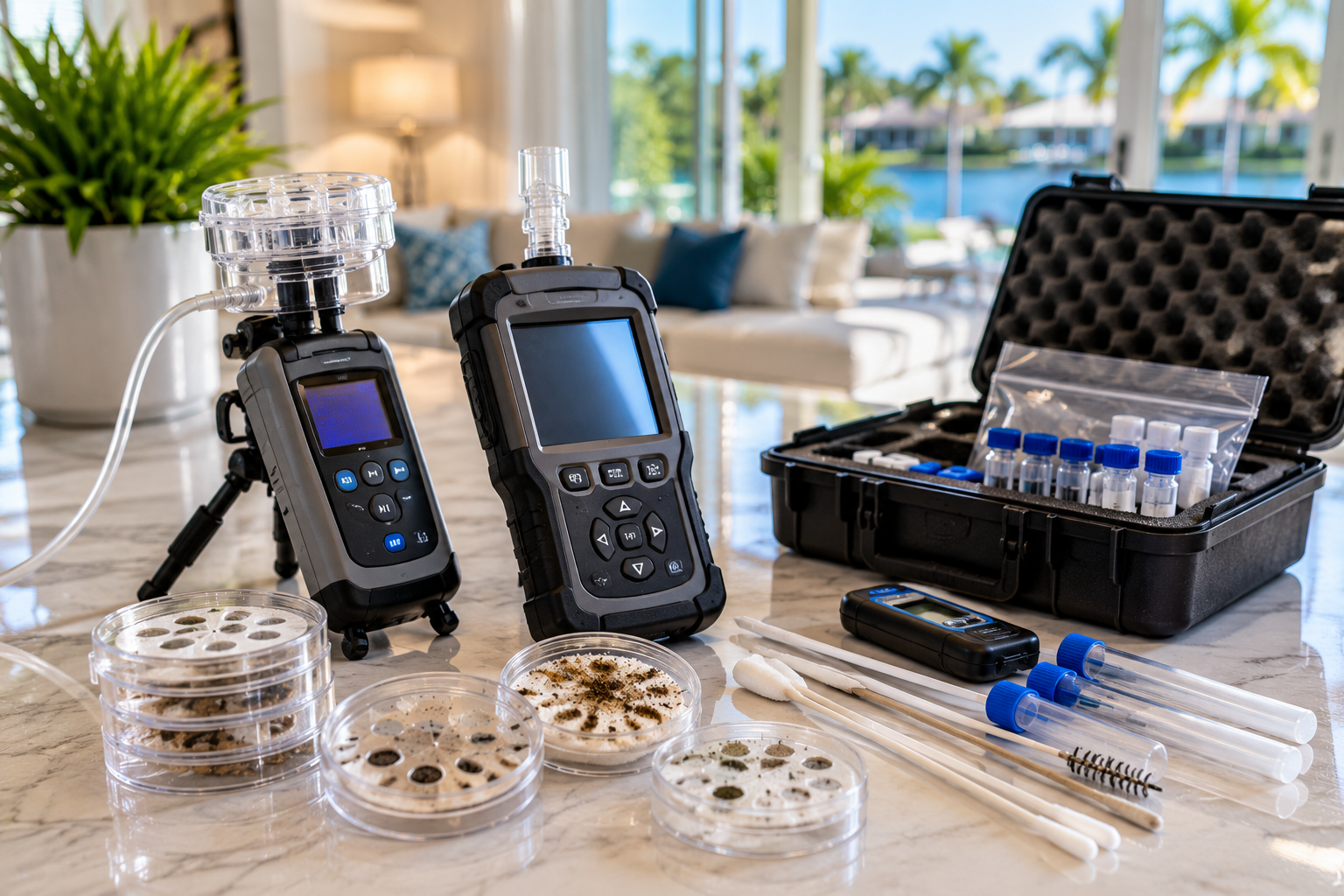
Mold testing may be useful when suspected growth is hidden, documentation is required, or sampling could help answer a specific question about the property. Learn how testing differs from inspection and when it may support remediation planning.
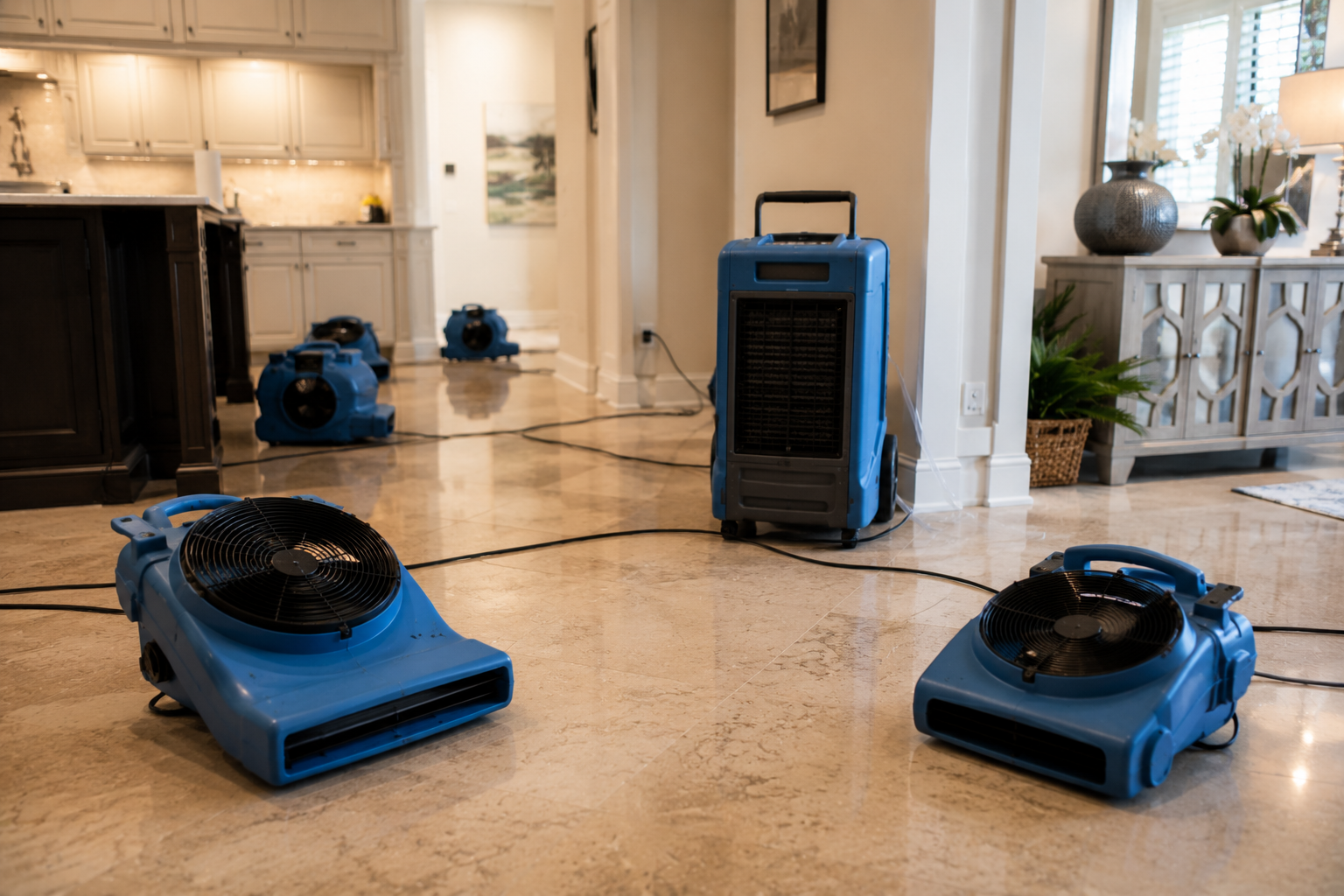
Leaks, flooding, roof damage, and storm-related water intrusion may require extraction and structural drying before mold conditions can be fully addressed. Review how water damage restoration can support recovery when wet materials or hidden moisture remain inside the property.
Request an Evaluation for Mold Removal or Remediation in Fort Myers
If you are unsure whether visible mold can be addressed through limited material removal or whether hidden moisture, water damage, or affected porous materials require a broader remediation approach, an evaluation can help clarify the scope. Fort Myers humidity, leaks, flooding, and storm-related water intrusion can all influence how far moisture has traveled beyond the visible area.
Request an Evaluation
Tell us where the mold or staining appears, whether it has returned after previous cleaning, and which materials or areas may be affected. Include any recent plumbing leaks, roof damage, flooding, storm exposure, musty odors, or recurring moisture that may help clarify the property conditions.
Thanks for contacting us! We will be in touch with you shortly.
Please try again later.
Mold Remediation vs. Mold Removal FAQs for Fort Myers
What is the main difference between mold removal and mold remediation?
Mold removal generally refers to cleaning or physically removing visible mold and affected materials. Mold remediation is a broader process that may include containment, filtration, removal or cleaning of contaminated materials, structural drying, and correction of the moisture conditions that allowed the mold to develop.
Is mold removal or mold remediation more appropriate for Fort Myers properties?
The appropriate solution depends on the extent of the growth, affected materials, accessibility, and underlying moisture source. Because Fort Myers properties can be exposed to high humidity, heavy rainfall, flooding, roof leaks, and storm-related water intrusion, a broader remediation approach may be needed when moisture has spread into walls, flooring, insulation, attics, or other enclosed areas.
Can mold removal be included in a mold remediation project?
Yes. Removing contaminated drywall, insulation, flooring, or other damaged materials may be one step within a larger remediation project. A licensed mold remediation professional may also use containment, air filtration, cleaning, drying, and moisture-control measures to address the affected area and reduce the risk of the problem returning.
Why must the underlying moisture source be addressed?
Mold can return when the leak, humidity problem, condensation, drainage issue, flooding, or water intrusion that caused it remains unresolved. Correcting the moisture source is therefore just as important as cleaning or removing the visible growth.
Do I need mold inspection or testing before choosing a solution?
Not every property requires both inspection and testing. A licensed mold assessor may be appropriate when the source, location, or extent of the problem is unclear, while testing may be useful when hidden contamination, documentation, or additional verification is needed. A qualified local mold professional can help determine which next step may be appropriate based on the property conditions.
Does mold remediation usually cost more than mold removal?
Remediation may cost more when the project requires containment, filtration, drying, moisture correction, or removal of multiple affected materials. However, limited mold removal may not be the most cost-effective solution if the underlying moisture problem remains or the mold continues to return. A property-specific estimate should consider the affected area, accessibility, water-damage history, and complete scope of work.